A Sidestep in Pinky Violence.
An interpretation of Door II: Tokyo Diary, by Banmei Takahashi — 1991.
Warning: this article reveals major plot points, including the ending.
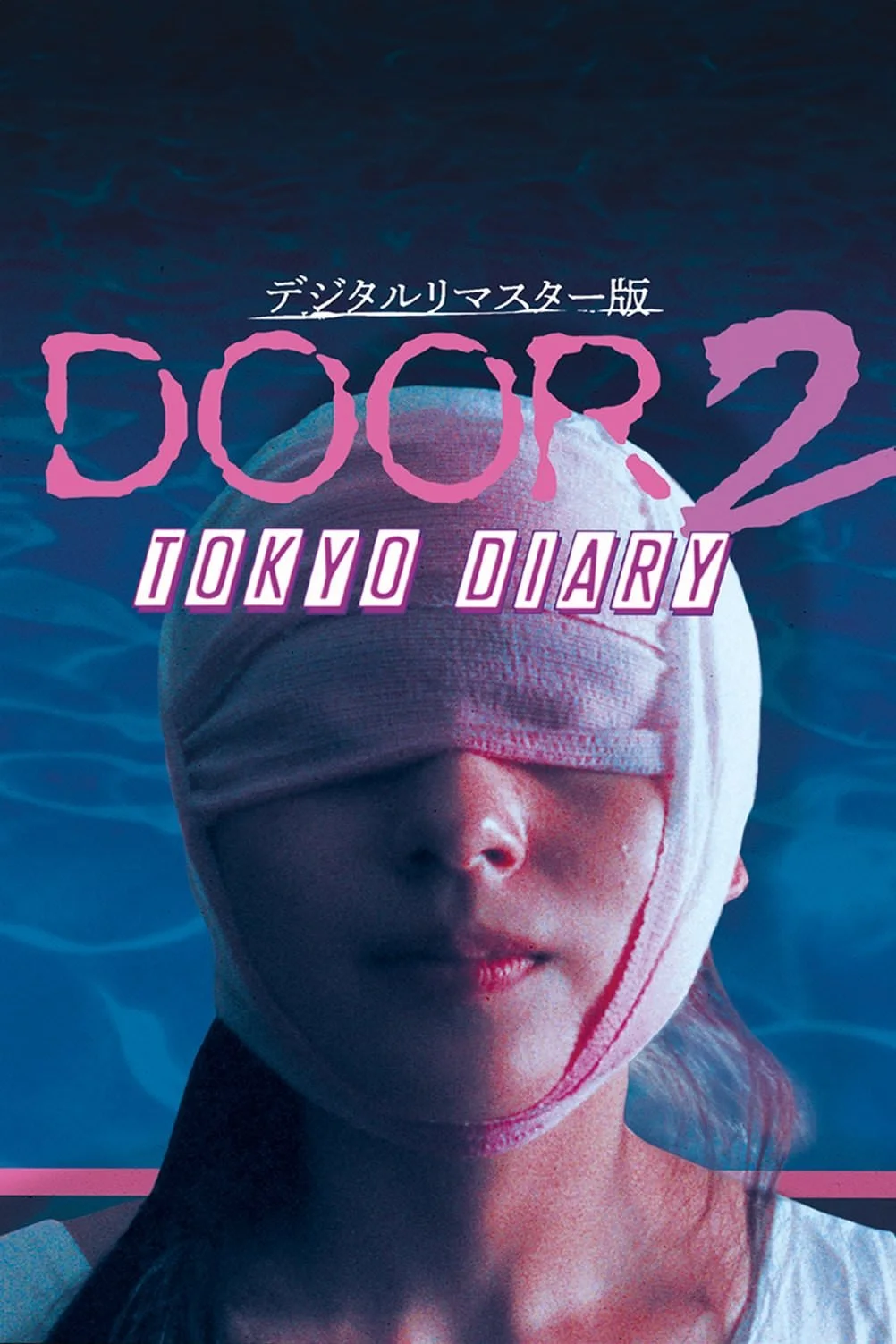
Why I love the Pinku Eiga¹ genre, and more specifically Pinky Violence films?
As a cisgender heterosexual man, I would say the most obvious answer is that I belong to an audience these films have often targeted. Watching beautiful women strip, and seeing the eroticism of bodies, appeals to me in a fairly straightforward way. Yet there is also something troubling about this genre, which emerged forcefully in the Japanese film industry of the 1960s and 1970s: many of these films depict women being assaulted and brutalized before they exact revenge and reclaim their power. One could cite, for instance, the incredible Female Scorpion saga, led by the legendary Meiko Kaji.
Revenge is a theme I particularly love in cinema. But why must a woman’s humiliation and the assault of her body so often be used to show that she is strong in her revenge? It should be stressed that this cinema was long dominated by men. Of course, it is difficult to generalize about a genre comprising hundreds, if not thousands, of films, of which I have seen only a tiny fraction. But is this violence truly necessary, beyond being part of the genre’s presumed conventions?
I am not especially fond of watching women being tortured, even if this narrative device can heighten the force of revenge. If these films appeal to me, it is above all because they offer powerful, determined heroines. That is something many films, across all genres, still deny us by relegating female characters to limited roles. One can love a film, or a genre, for all or only some of its tropes: that is often the case for me here. But some films shift the expectations of the genre, take a step sideways, and tell a very different kind of story. They move away from the familiar frameworks I have just described to imagine a pinky violence less focused on the assault-and-revenge pattern, and more on female self-fulfilment.
Door II: Tokyo Diary is one of them.
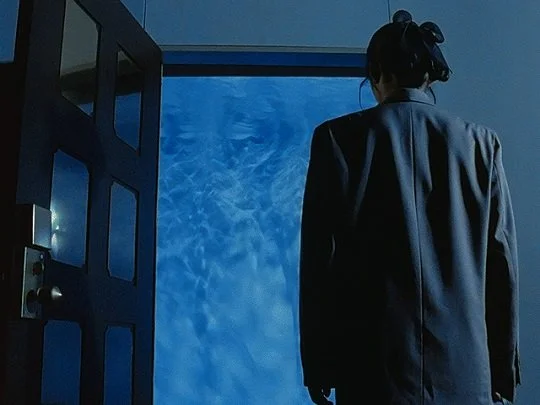
I discovered the film through a Carlotta box set in France, available on Terror Vision for USA, which brings together the first two films in what seemed to be a saga — with the third directed by Kiyoshi Kurosawa, no less. I will leave the first film aside: it is very enjoyable and interesting on several levels, but it left me somewhat unconvinced. Door II is not really its sequel. If the first is a home invasion film, the second is a variation on pinku eiga, revisited through the lens of the 1990s, and above all through that of its director, Banmei Takahashi, and its screenwriter, Toshiyuki Mizutani.
The story follows Ai, a call girl whose work exposes her to unpredictable dangers every time she walks through a client’s door — a thematic reference to the title. She works independently: clients leave their names and desires on a voicemail service, and she remains free to accept or refuse the appointment. This is how she meets Mamiya, a mysterious painter who will become both a regular client, an impossible love, and the catalyst for a re-evaluation of her place in society and of her own freedom.
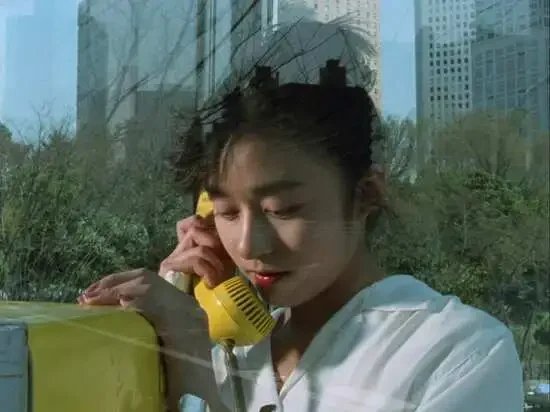
Perfectly embodied by Chikako Aoyama, Ai has a powerful presence and lights up the screen with her almost supernatural beauty. Let’s be honest: for me, the success of a pinku eiga often depends largely on its actress — on her performance, her beauty, and her charisma.
What strikes us from the beginning is that Ai consents to her work and chooses her own appointments; this does not mean that she consents to everything that happens to her, nor that she necessarily finds fulfilment in this situation. The film reveals that gradually. But the plot is not initially driven by an assault. There will be two: one perpetrated by a woman, which I will return to later; the other by an extremely violent man, who physically and psychologically harms Tomoyo, a friend of the heroine. Yet this scene does not become the engine of a conventional revenge narrative. Instead, it serves as a brutal reminder of Ai and Tomoyo’s vulnerability.
Even more striking is Banmei Takahashi’s command as a director. The film is beautiful: its compositions are carefully crafted, its exemplary economy of means lends itself to minimalism, and its cold cinematography, along with its empty luxury hotels, evokes a sense of emptiness beneath opulence. The direction keeps us close to Ai’s point of view throughout, with great effectiveness and several well-judged poetic moments. The city itself becomes almost a character, regularly appearing through mirror-like superimpositions on Ai’s face.
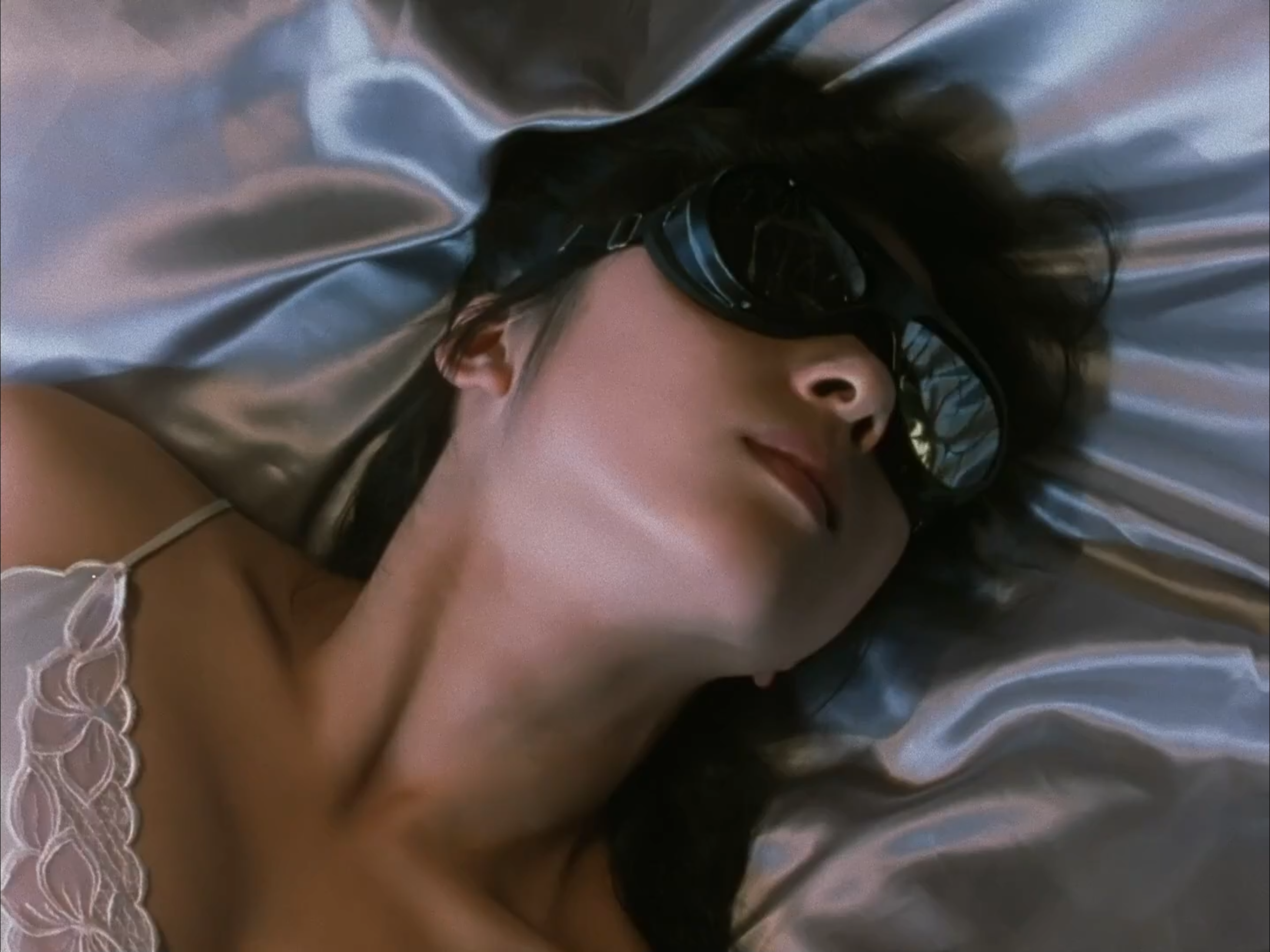
Ai is in love with Ichirô, a childhood friend with whom she forms a close trio alongside Yûko. Yûko will become Ichirô’s wife, preventing Ai’s love from being fulfilled. The film seems to me to turn conventional love into a decoy for the viewer, especially since Ai’s name means “love” in Japanese. What the film is telling us is far more complex than it first appears.
In 1991, as Japan’s economy was shifting after the bubble years, it feels as though an entire country was waking up with one hell of a hangover. The film never directly recounts this period, but it seems to carry its traces in the background: a young generation plunged, at best, into incomprehension and, at worst, into a profound crisis of identity. The prosperous years are ending, and Ai appears as a woman dreaming of independence, troubled by her sexual desires in a conservative society, while not being entirely immune to the pressures weighing on her. Thus, when the three friends are talking by the water and Ai’s friend points a fake gun at the city’s buildings, the gesture feels both innocent and suggestive of a simmering anger.
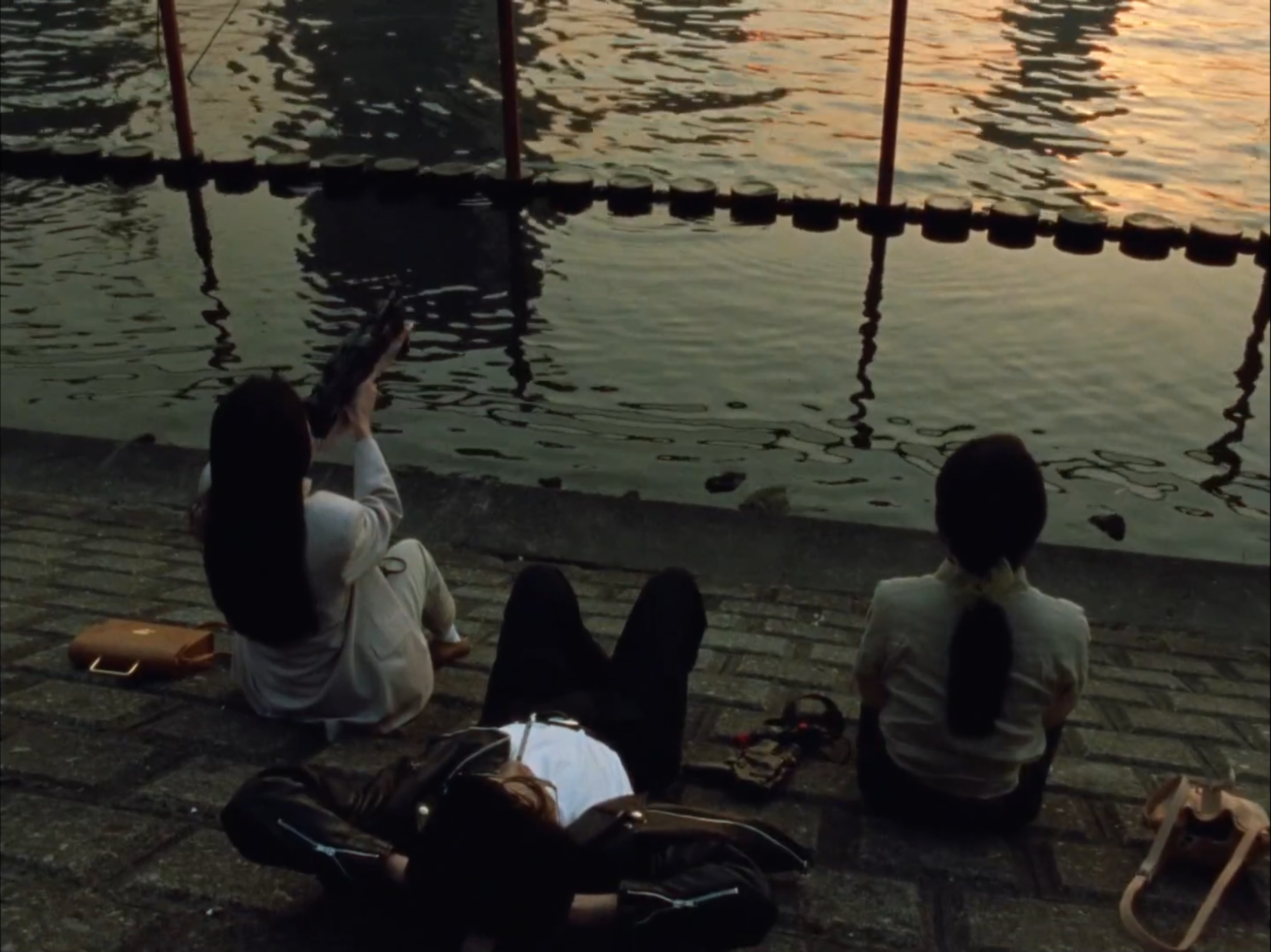
Ai cultivates this independence. But she is not entirely free. She hides her work from Ichirô, from Yûko, and from society at large. Her very way of working removes her from any system and inevitably makes her more vulnerable. Walking through her clients’ doors with a knot in her stomach gives her a false sense of freedom: the near-daily adrenaline rush.
If she loves Ichirô, she is never able to fully live out that relationship. She leaves him with false hope, until he turns to Yûko, whom he will eventually marry. Why is Ai incapable of loving fully? Perhaps because it is not love at all, but a way of keeping an exit open: one that would allow her to fit into a society whose gender norms are still heavily shaped by the ideal of the wife and stay-at-home mother. Perhaps it is also because her sexual desire makes her elusive, caught in a vortex of fleeting relationships.
She makes this deep desire explicit in only one scene, which tells us more about her. An older man offers to pay her simply to spend time with him, without sex, because he is no longer able to have it. Ai refuses: for her, physical intimacy is essential.
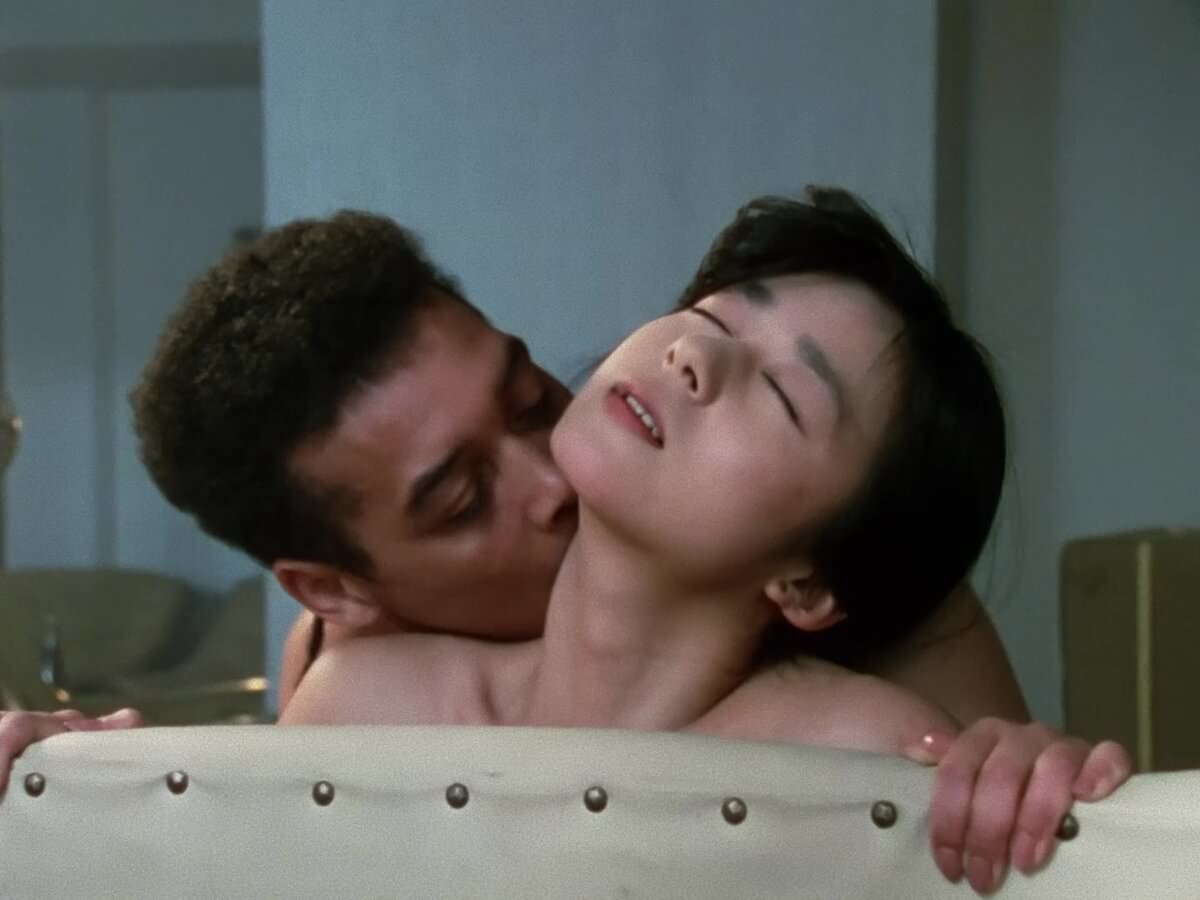
Mamiya seems to be the character who most directly recognizes her desire, while also attempting to regain power over her. If she thinks she is falling in love with him, she comes to understand that their relationship is doomed by their respective natures. He makes her understand this by freeing her from any sense of jealousy: he forces her, while tied up, to witness a sexual encounter with another woman. The method is obviously questionable, but Ai instantly reclaims power by taking revenge on him in a car-orgasm scene that is especially powerful symbolically. While becoming the trigger for her emotional independence, Mamiya is denied any pleasure in return. The film thus underlines Ai’s reclamation of power.
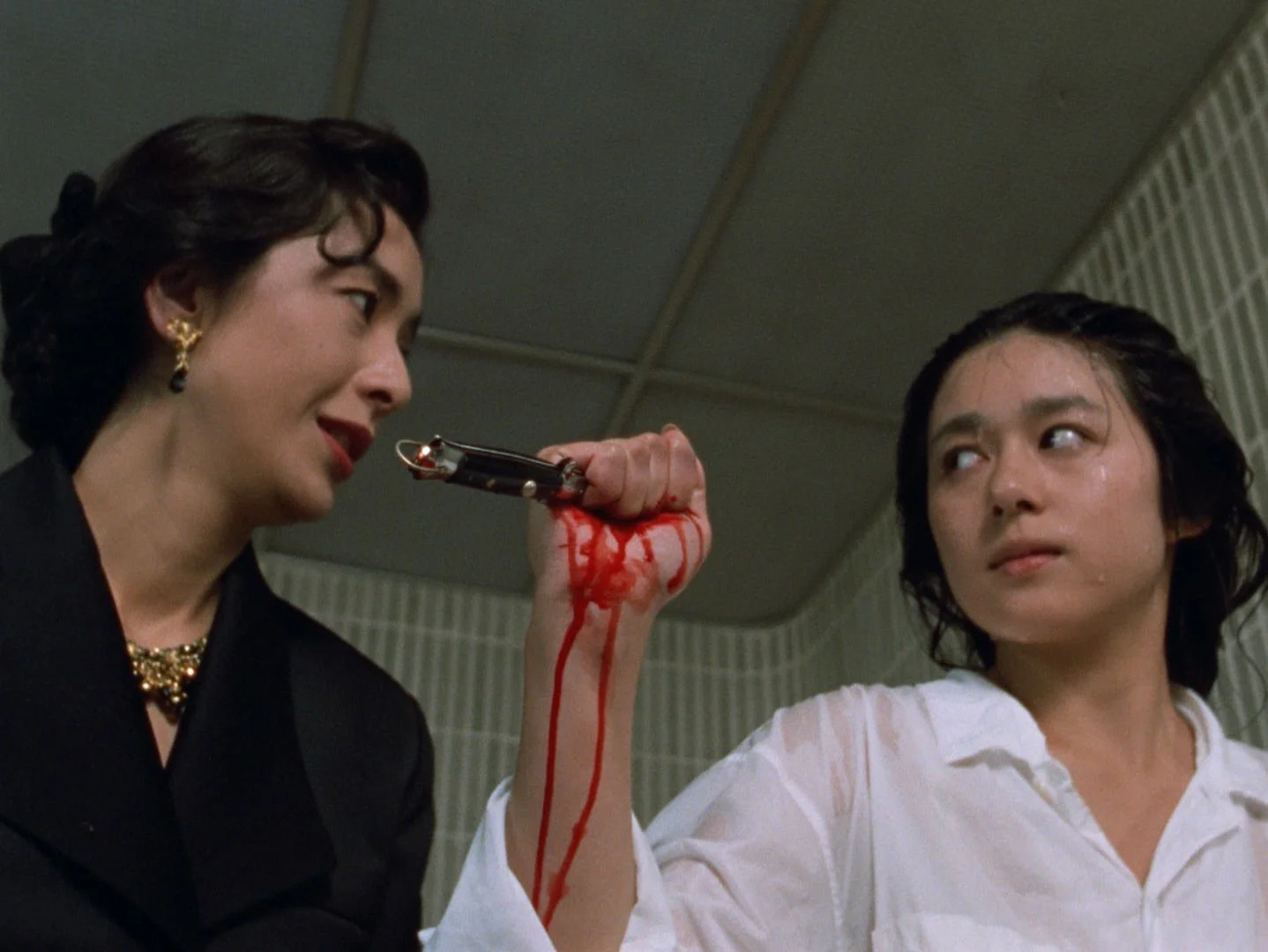
One particularly striking scene shows a woman attacking Ai with a knife in a hotel room. At first, she presents herself as a woman who appears to have ties to the underworld who cannot accept a call girl working “outside the system,” on her own account. When Ai takes control of the situation by grabbing the knife by its blade, we understand that the woman is not so bad after all. She is probably jealous of Ai’s independence, but above all she is there to warn her about the dangers inherent in her work. She shows Ai her scar, the trace of her mastectomy, which we imagine to be the result of a tragic assault.
Once again, Ai takes control of her life through the extremely powerful image of her bloody hand firmly holding the knife blade. This image of painful determination could hardly be more striking.
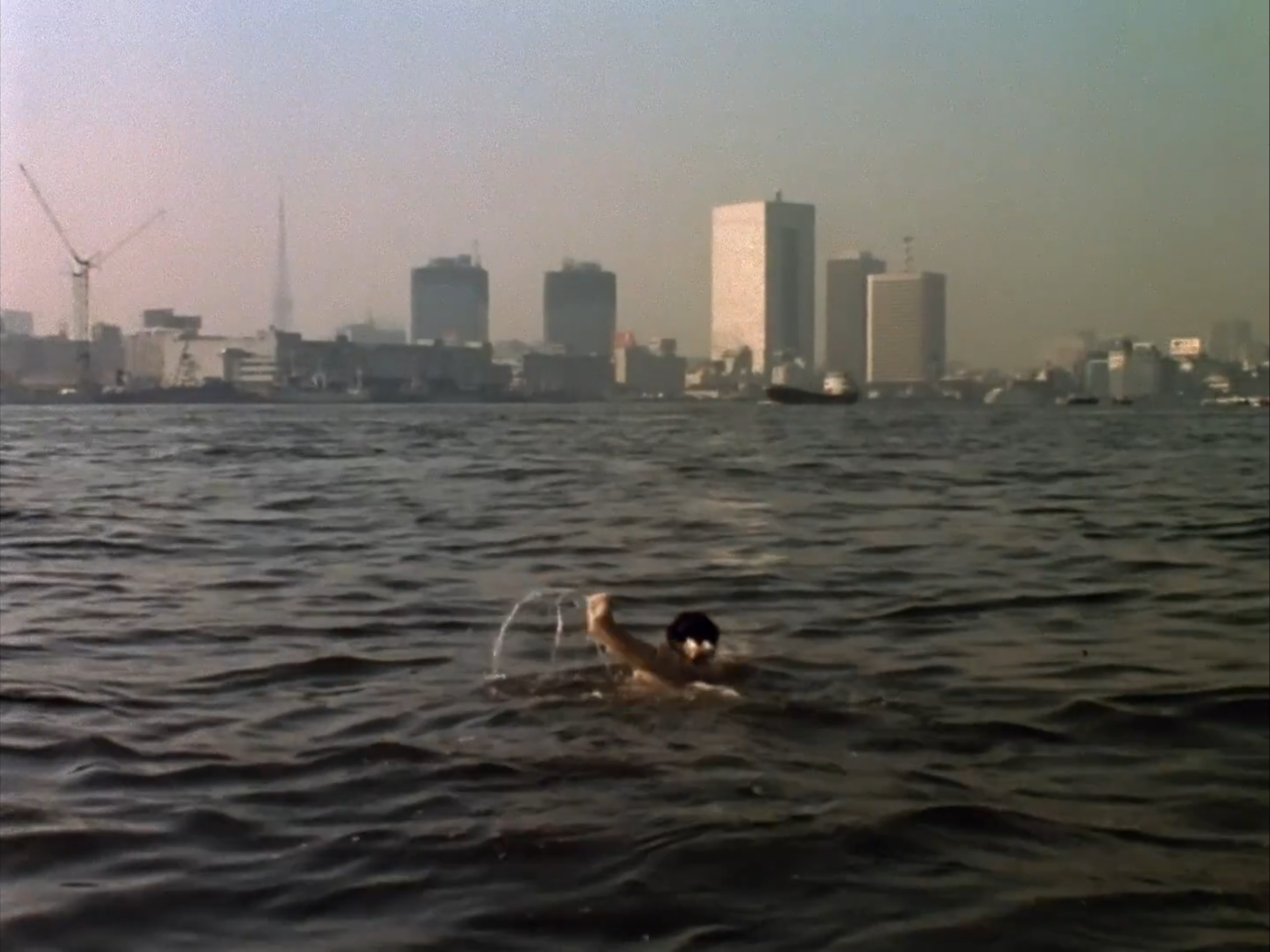
The final scene is eloquent. At Ichirô and Yûko’s wedding, Ai prepares to make a speech. She confesses her affair with Ichirô, then reveals her occupation to the entire audience, which this time symbolizes society itself. What follows is an exchange of slaps between Ai and Yûko, before what I experience as a fantasy vision on Ai’s part: the two women smile at one another; Ai leaves the room, steps outside onto the boat where the ceremony is taking place, then dives into the sea and swims toward the shore. Credits.
What makes me think it is a fantasy is that exchange of smiles. As though all Ai desires is to be accepted by those around her and by society, and as though this plunge into the sea were an ultimate gesture of freedom — a way of escaping the role others want to assign to her desire. Perhaps it is also a way for the director to end on a hopeful note, in the form of modern poetry.
I would not call it an unequivocally feminist work. Yet it contains the elements of a feminist reading, perhaps even an ambivalent one, whether or not it was consciously intended by the screenwriter and director. Unlike many films in this tradition, its main character becomes above all a magnificent and troubling portrait of a woman who never stops claiming her independence and asserting her freedom. For that reason alone, the film is worth watching — even before considering the formal beauty that lingers in the mind.
¹Pinku eiga — literally “pink film” — strictly refers to an independent form of Japanese erotic cinema that emerged in the early 1960s and was made for adult theaters. Usually produced on small budgets, these films combine nudity and sexual content with genres as varied as drama, thriller, comedy, and experimentation. The term is sometimes used more broadly to describe other forms of Japanese erotic cinema, such as Roman Porno or Pinky Violence, though these are historically distinct traditions.See also: A Snake of June (Rokugatsu no Hebi, 2002) by Shin’ya Tsukamoto. This erotic thriller likewise explores female desire, sexual repression, and the ambiguity between empowerment and coercion through a married woman blackmailed by a stranger.