When Morning Comes, I Feel Empty
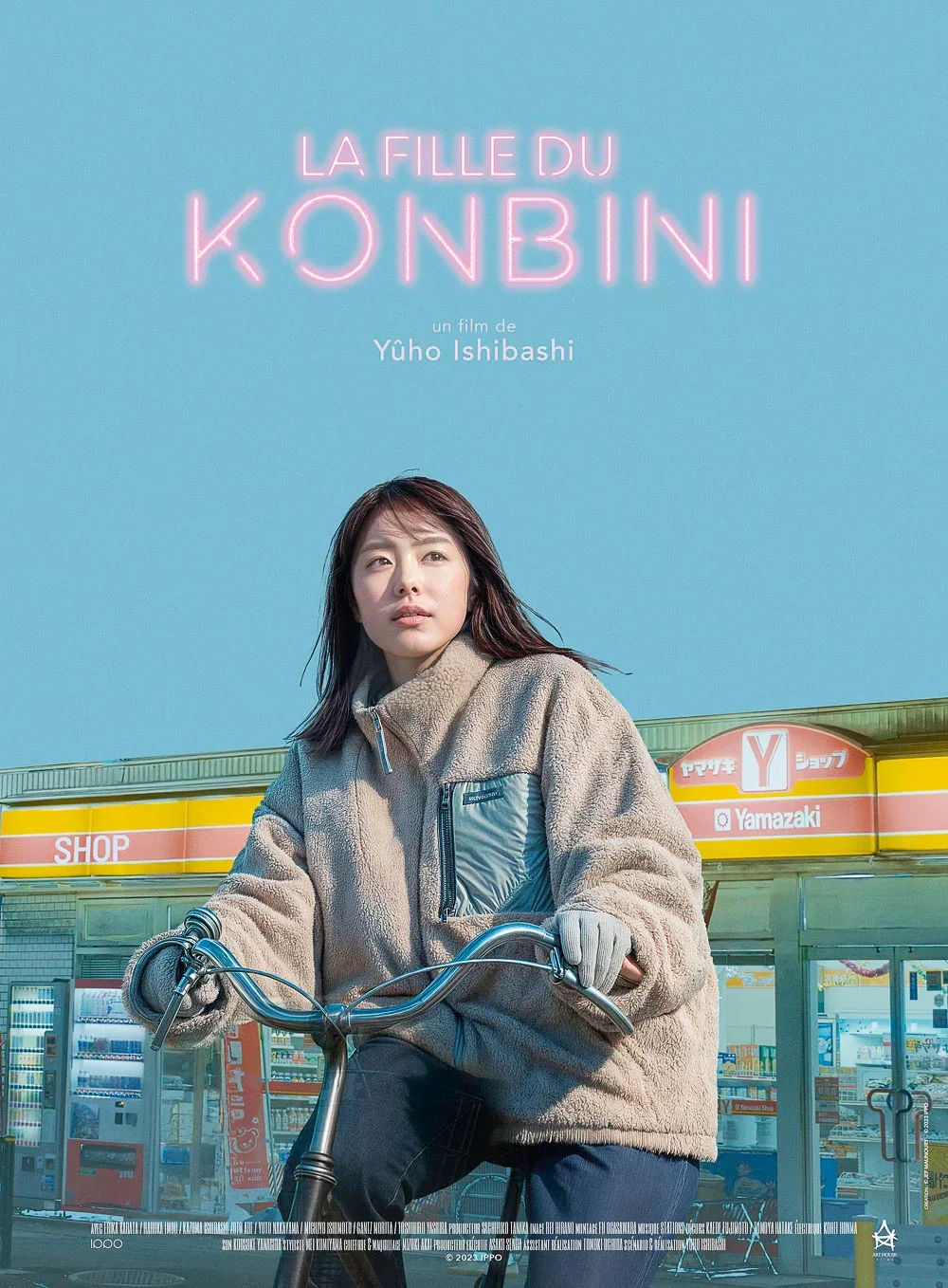
Written and directed by Yuho Ishibashi, When Morning Comes, I Feel Empty is compelling in more ways than one. The film was introduced to American audiences at the 2023 Japan Cuts festival. I had the opportunity to discover it myself earlier that year during Hanabi’s preview screenings in France, and it has stayed with me ever since.
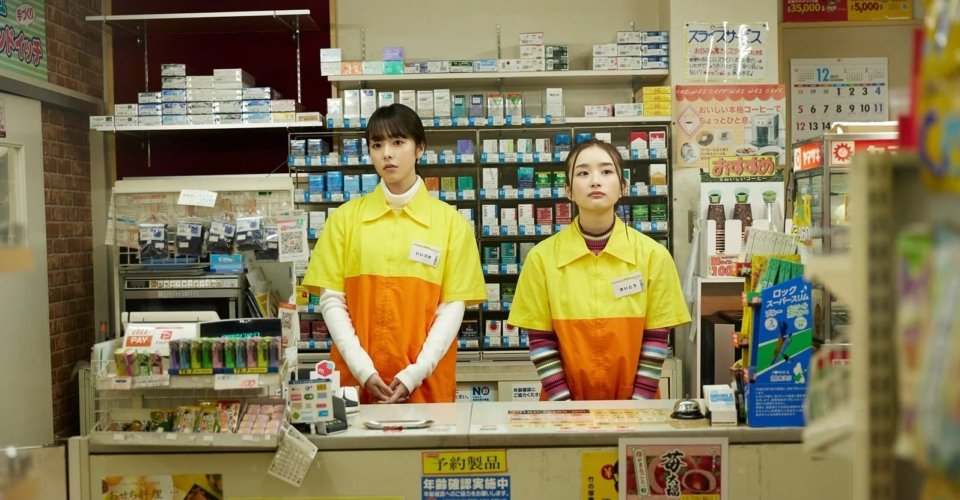
Erika Karata plays Nozomi, a young woman who has walked away from her company job and the career path laid out before her to work part-time at a convenience store. There, she meets Kanako, a former middle school classmate played by Haruka Imou.
Nozomi is clearly a young woman who has fled a corporate career. Well, we never really find that out for certain. But as the film unfolds, we understand that she was living in a toxic environment, and that the only way for her to rebuild herself was to escape and find a slower rhythm of life. She initially finds that source of comfort through a modest job at a konbini, one of Japan’s ubiquitous neighbourhood convenience stores. It is an unambitious job, but one that gives her a simple framework.
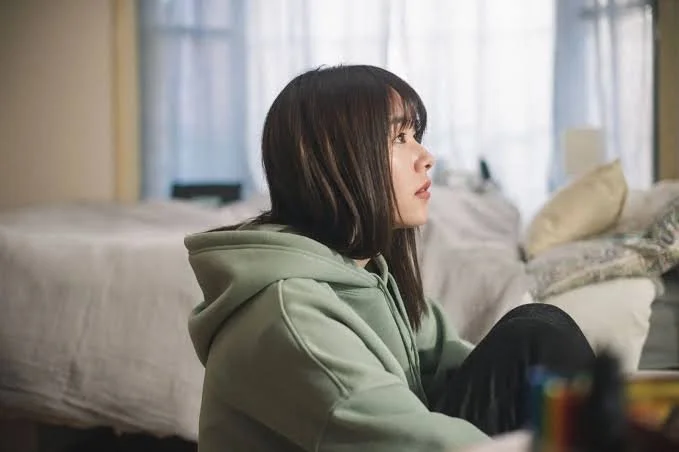
The original title, 朝がくるとむなしくなる — When Morning Comes, I Feel Empty — offers a clear insight into the film’s true subject. Although the word “depression” immediately comes to mind, the director speaks about it differently: “Going to school or work, and even just continuing to make an effort day after day, are not things that necessarily come naturally. I think everyone is doing their best while keenly feeling how difficult it can be. That moment when you wake up in the morning and think, ‘Ah… I have to go to school,’ or ‘Ah… I have to go to work,’ is something everyone truly knows. Nozomi, the protagonist, is also a character who lives with these kinds of feelings. The title came to me very instinctively.”
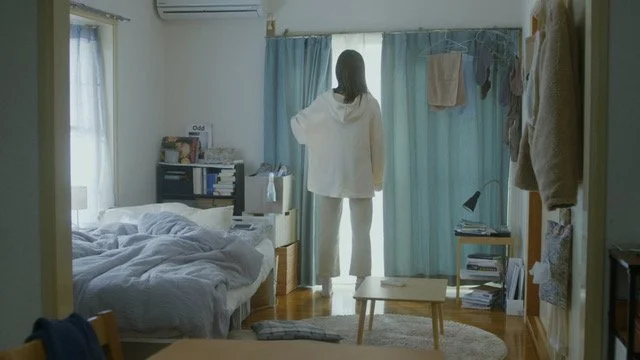
When the alarm goes off one morning, Nozomi slowly slips out of bed. She walks over to her window to pull back the curtains that still conceal the daylight. But the curtains get stuck. Curtains… such ordinary objects, yet capable of keeping us in darkness or allowing us to retreat before taking in the sunlight. It is better if they work, because staying in darkness forever is not desirable. We have to wait until the end of the film to see them repaired: they then become an allegory for the character’s possible recovery.
This slow rebuilding comes through a repetitive daily life, set within a safe and controlled environment. But it also comes through a friend who becomes a comforting lifeline for Nozomi. This friend, whom she has not seen since middle school, is Kanako. And the most beautiful thing about this story is that the two actresses have also been friends off camera since their school days. The director sees it as a happy coincidence. Erika Karata had already been considered for the role when Haruka Imou, with whom Ishibashi had worked before, told her that the two women knew each other well. That was all Yuho Ishibashi needed to draw on the personal experience of her two actresses in shaping the characters in her film. She explains: “Imō told me that she was friends with Karata. I thought that if I built a story around the relationship that exists between Karata and Imō, something truly interesting might emerge.”
And that is one of the film’s great strengths. The director lets the camera roll in long takes, with her two actresses in the frame. No cuts: simply two characters more realistic than one might expect, moving between silences that are never awkward and comforting conversations. Ishibashi uses a modest-looking shooting method, but one born of great intelligence. She allows her characters and situations to exist. Narrative and contextual off-screen space occupy a privileged place. Everyday gestures become a soothing spectacle. Yuho Ishibashi puts it beautifully: “My early films already dealt with the uneventful daily lives of middle and high school students. I have always wanted to tell stories that arise naturally from encounters between people and their everyday relationships. At the same time, I do not want to abandon the viewer entirely. Even when a subject or story may seem ordinary at first glance, I think that by working on the way it is shown, its rhythm and its expression, it is possible to make a film that remains enjoyable to watch. That is something I continue to work on.”
In these respects, the film evokes the Japanese term iyashikei (癒し系), used for gentle, contemplative and comforting works. Yet that would be reductive. It would overlook the film’s social dimension, which emerges through Nozomi’s situation — one that resonates with the lives of many Japanese people — but also through the presence of its lead actress, Erika Karata…
Karata came to prominence with Asako I & II, directed by Ryusuke Hamaguchi in 2018. After the film, the actress had an affair with her on-screen partner, Masahiro Higashide, who was married at the time. The story caused a major public reaction in Japan, and Karata had to step away from acting for a long period. Higashide, meanwhile, was able to continue his career. This difference in consequences brings to mind — without fully accounting for them — the deeply unequal gender dynamics that still exist in Japan. It is not difficult to imagine how painful that media exposure must have been for the actress.
Nozomi’s past is never clearly defined, but we can read between the lines that she, too, has suffered a form of harassment in her former workplace. It is no mere coincidence that Erika Karata feels so connected to her character. Yuho Ishibashi tells us why: “Since we had that opportunity [to cast Erika Karata, Editor’s Note], I decided to write the character specifically for her, imagining her past and personal history. As for the fact that Karata was forced to suspend her activities for some time following what had been reported in the media, I do not think I am in a position to comment on the facts themselves. But the situation, in itself, made me deeply uncomfortable. Is it really right for someone to be pushed so far into a corner by an overwhelming majority, even on the scale of an entire society?”
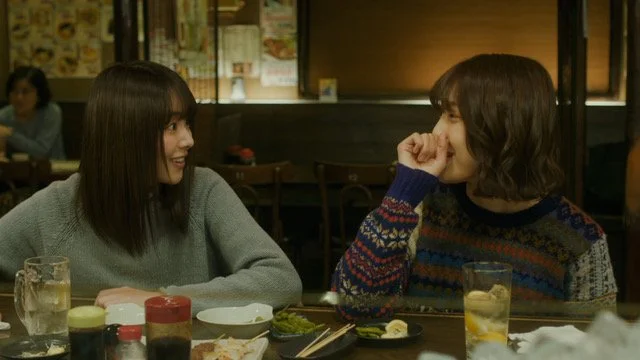
Nozomi and Kanako
The film plays its political part without ever becoming heavy-handed. Whatever the reasons behind the harassment, many people in Japan work in deeply toxic professional environments. Crushing workloads, daily pressure, sexism and other inequalities: some corporate settings in Japan can break people. In the most tragic cases, overwork can even lead to suicide. It is a major social issue, one the country has been trying to address for years.
When Morning Comes, I Feel Empty does not claim to encompass that entire reality. Rather, it captures one of its intimate echoes: the desire to retreat into a simpler, less ambitious life, like Nozomi’s. Even if the reasons are not always the same, this desire to slow down can speak to us universally, at a time when everything seems to move at an exponential pace. Returning to life’s simple things can offer a source of comfort and make us open to the encounters that matter. Like Nozomi’s encounter with Kanako.
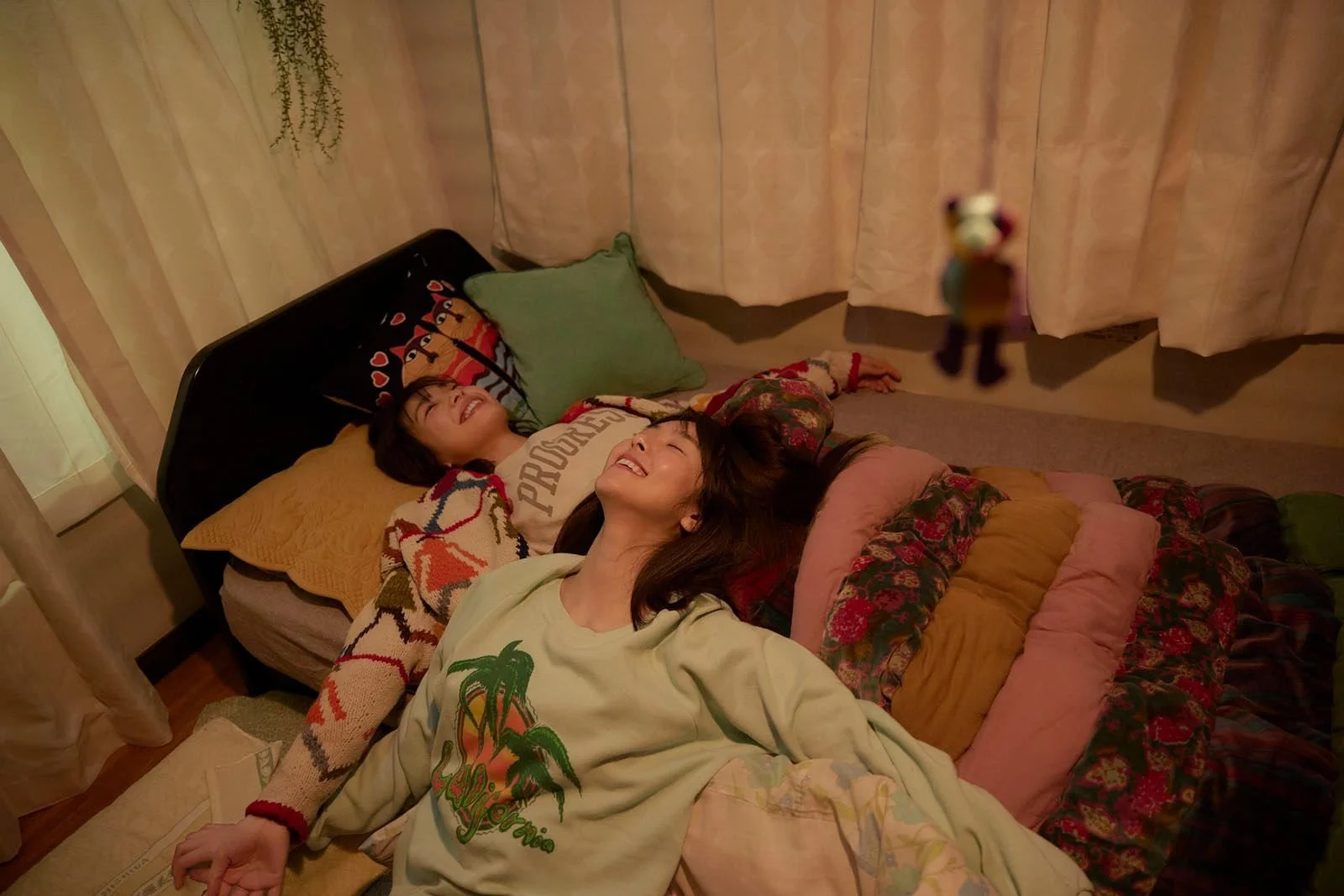
The film is only 76 minutes long, yet it manages to slow us down and soothe us alongside Nozomi, who, we hope, will find a better sense of purpose in her life despite feeling so empty. A note of hope is possible. And while the rest of her life may find its own path off-screen, Nozomi stays with us. She is one of those film characters so beautifully written and embodied that they linger in the mind and leave us feeling a little less empty every morning that comes.
Source : https://cinemagical.themedia.jp/posts/42341402/