A Pale View Of Hills
Version FrançaiseWarning: this article contains major spoilers about the film’s plot and ending.
How accurately can we recount our past? All the more so when that past is tragic and painful. Stepping back, taking a sideways step, becoming the spectator of a fiction by telling one’s story through another character may then feel necessary.
A Pale View of Hills tells the story of Niki, a young British-Japanese woman who wants to write about her mother, Etsuko. A survivor of the atomic bombing of Nagasaki, Etsuko later moved to England and remains haunted by the suicide of her eldest daughter, Keiko. She has always refused to open up. As she prepares to sell the family home and leave it behind, she finally gives Niki a few fragments of her post-war years. Yet the narrative gradually becomes unsettling, particularly through a little girl: Sachiko’s daughter…
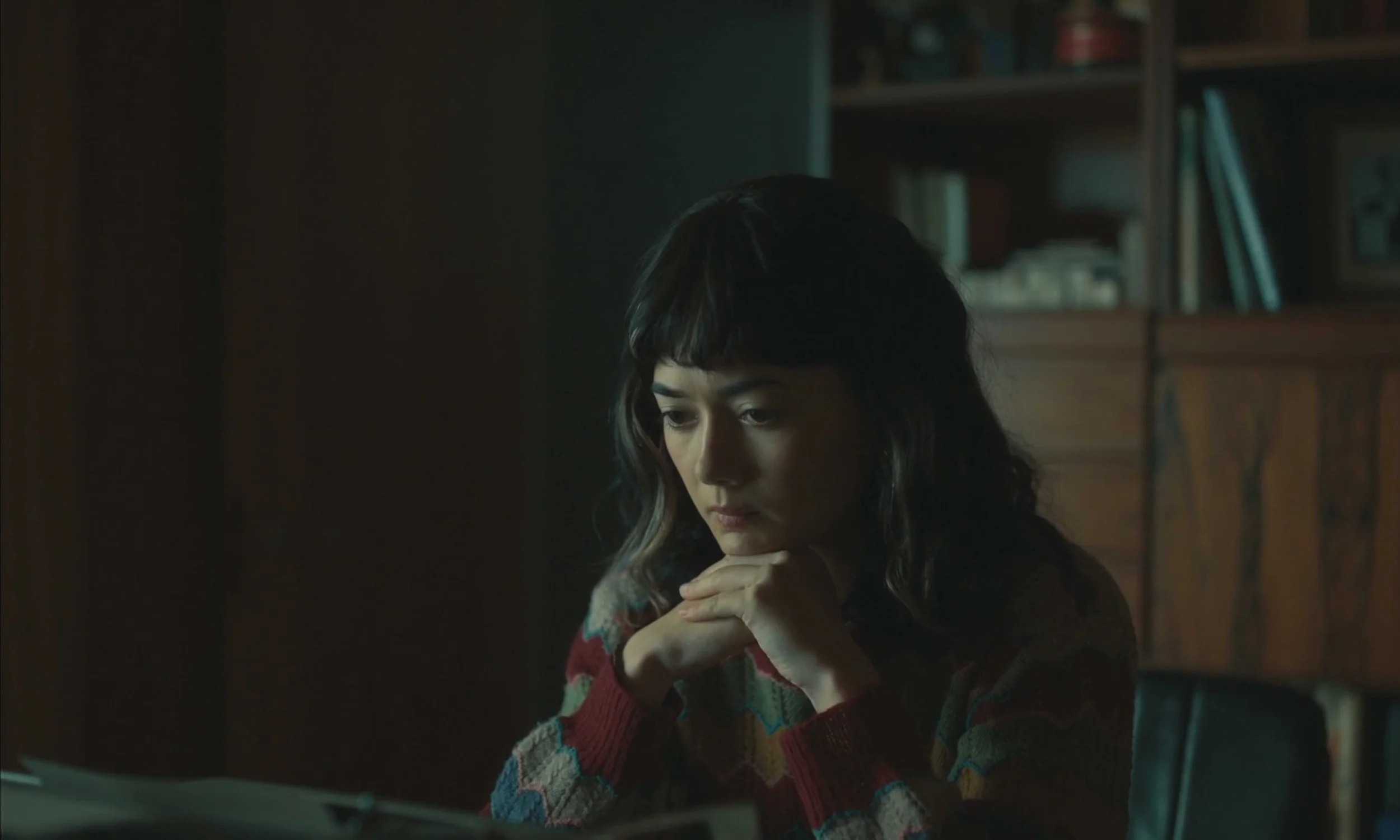
Niki (Camilla Aiko)
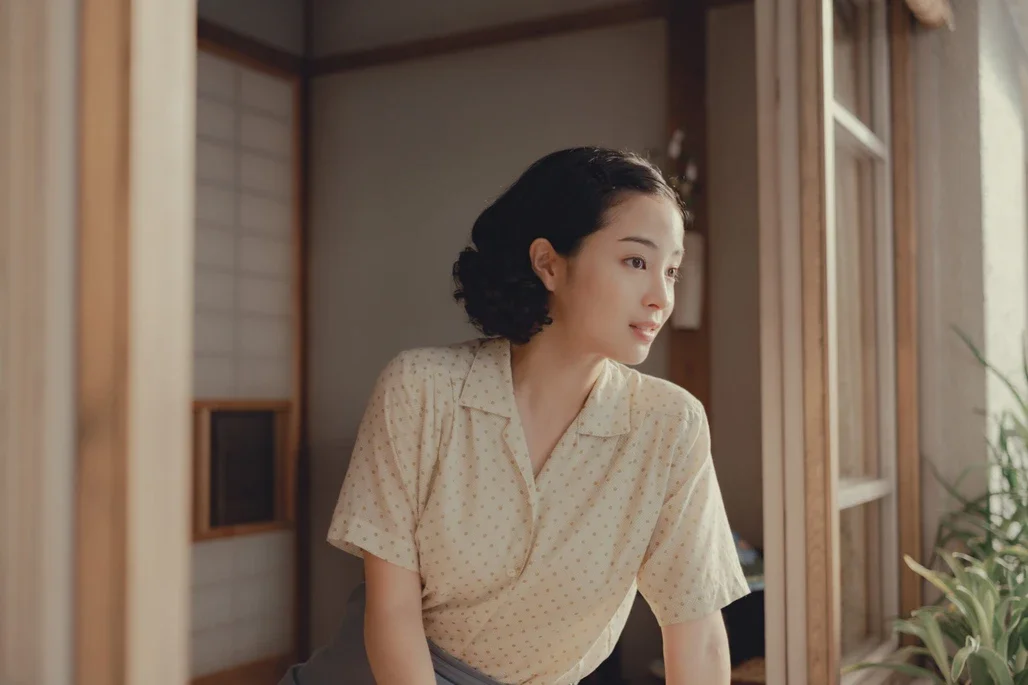
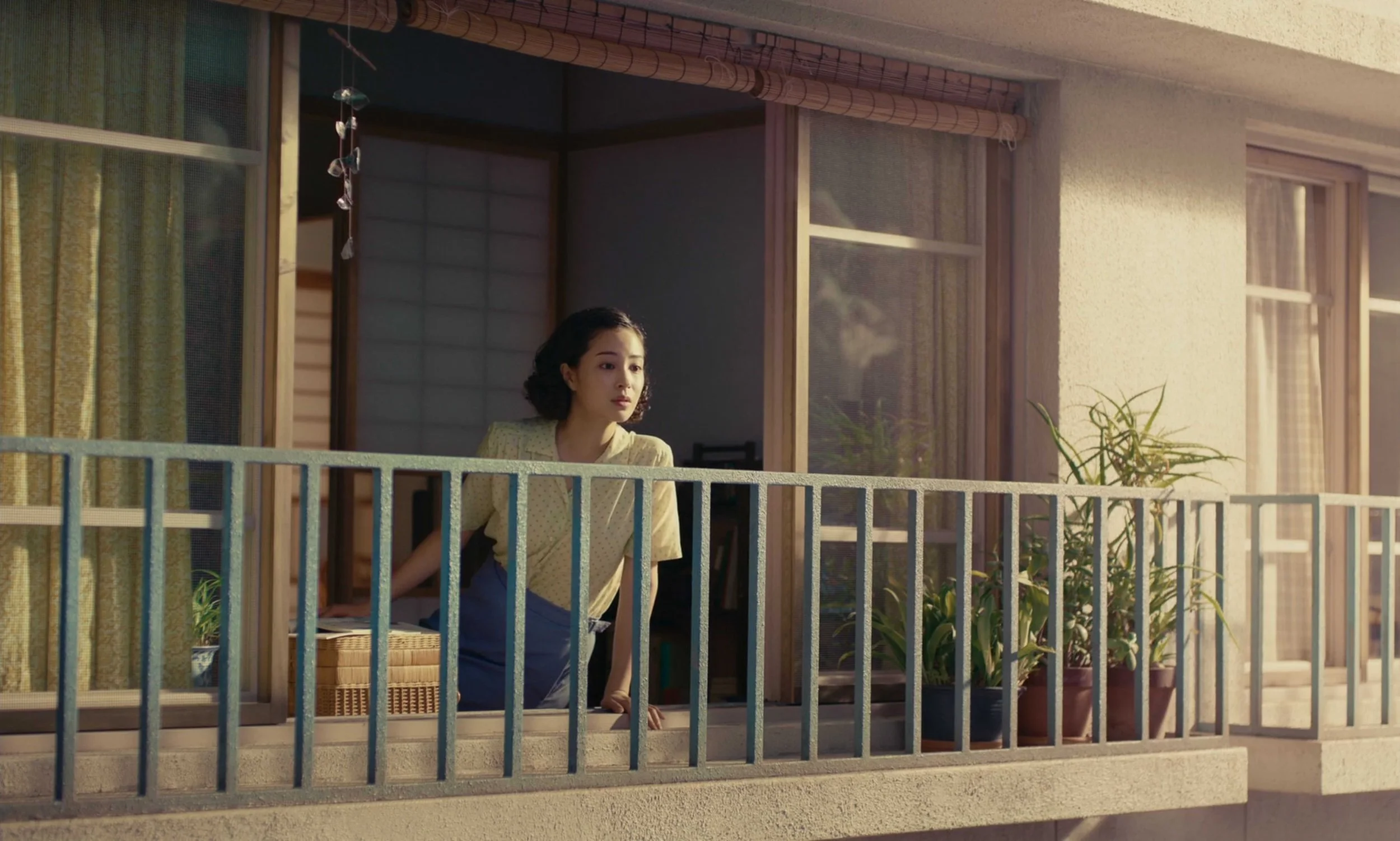
In 1952, Etsuko, played by Suzu Hirose, stands on the balcony of her apartment in the hills of Nagasaki. The view is spectacular, romantic — perhaps too romantic. Below, she watches a beautiful, mysterious woman living in a modest house and seemingly entertaining an American man. Etsuko is fascinated. The woman smokes, wears beautiful clothes, is physically affectionate with the man, and seems, above all, as free as the wind — or at least as Etsuko imagines her to be.
That woman is Sachiko, played by Fumi Nikaido. She has a daughter, Mariko, and lives in poverty. While everything appears to set the two young women apart, they nevertheless become friends. As their conversations unfold, we notice that Etsuko, who is pregnant herself, grows deeply attached to Mariko. But something feels off: at times, this affection seems to go beyond simple fondness, as though Etsuko sees in Mariko a child who is not entirely her own. A dissonance emerges that only the audience can perceive.
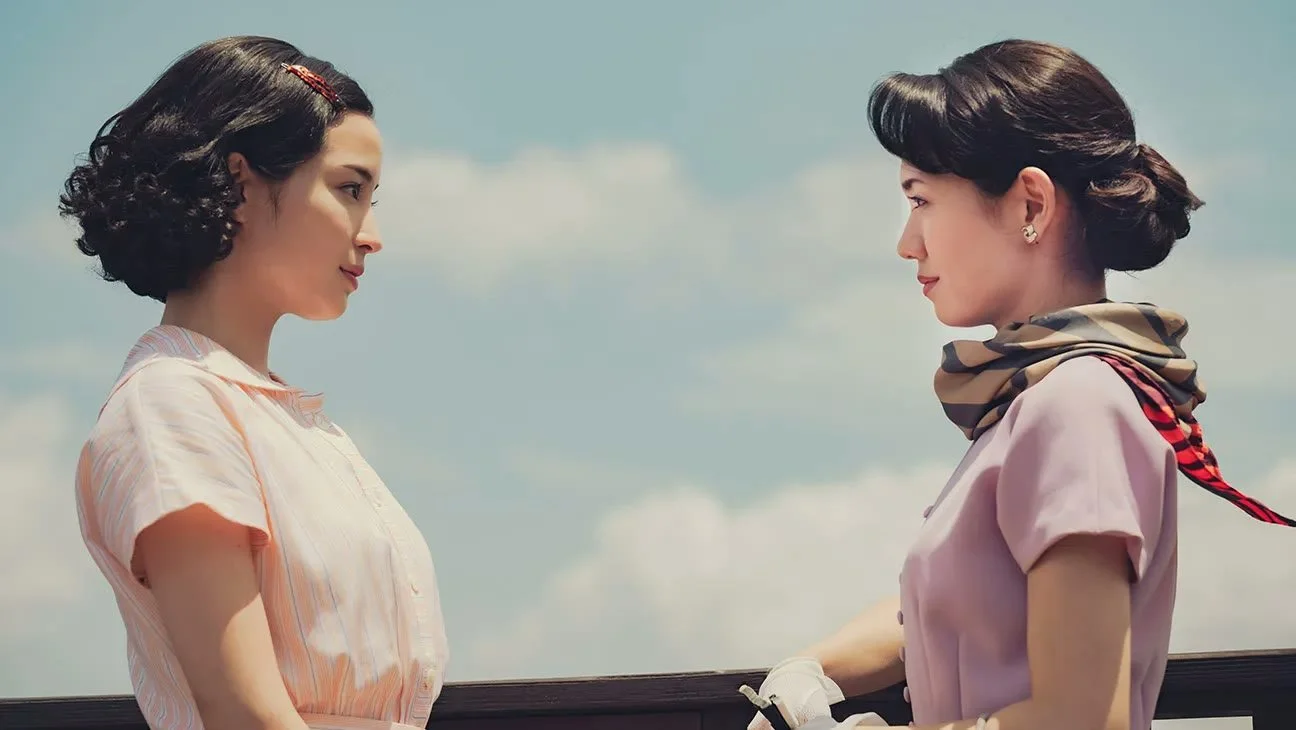
Estuko (Suzu Hirose) and Sachiko (Fumi Nikaido)
In 1982, in the United Kingdom, Niki goes for a walk with her mother. They meet a neighbour who makes the tactless mistake of mentioning Keiko, Etsuko’s eldest daughter, who took her own life. Etsuko then makes up a story: Keiko is alive and living in London. Niki is speechless. She discovers that her mother is capable of lying, not to save face, but as a survival mechanism: so as not to confront that pain directly. This is probably the film’s turning point, the moment when the audience begins to realise that what we are told about 1952 may not be as truthful as it seems.
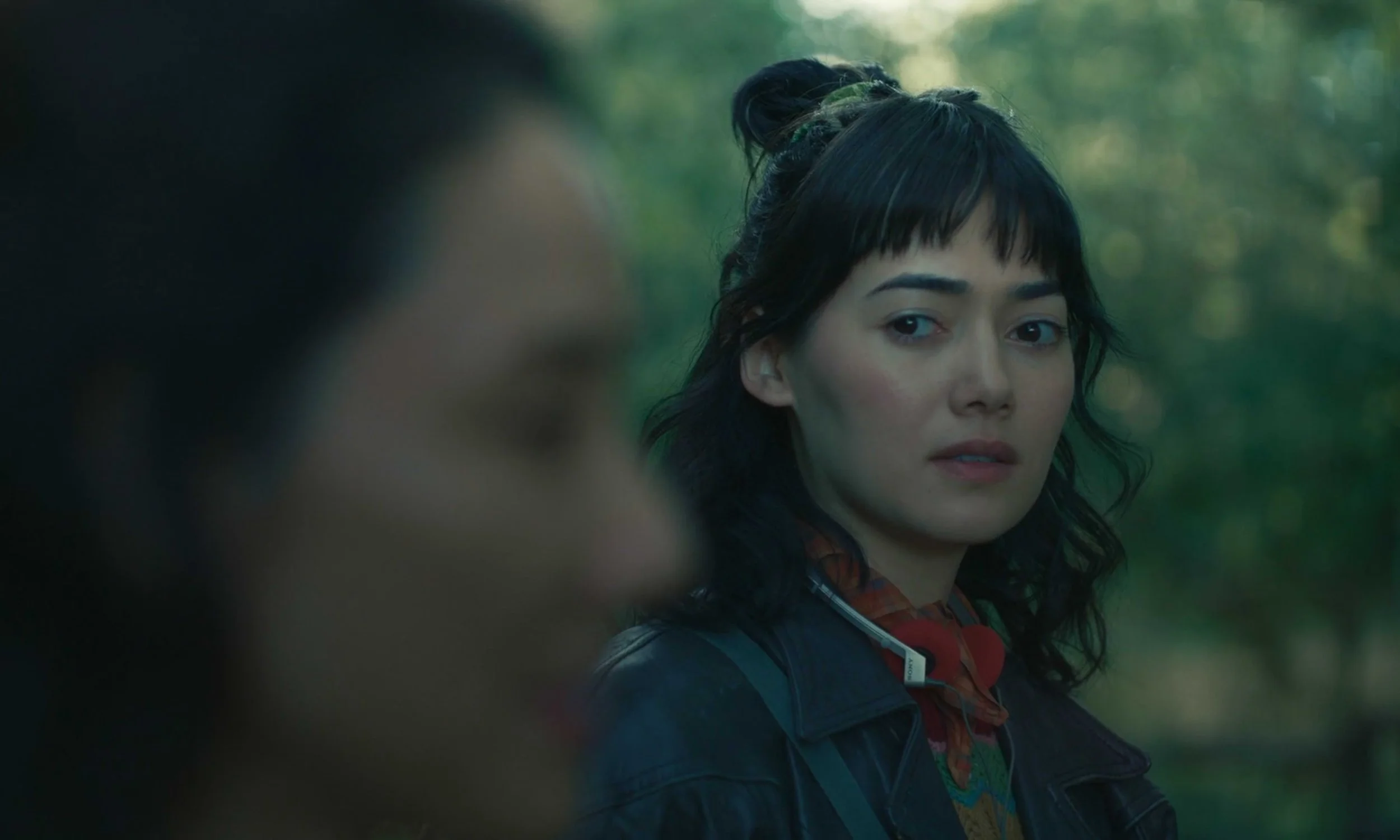
Filmmaker Kei Ishikawa is quite explicit about this. While the cinematography in the 1982 scenes is dark and naturalistic, the 1952 sequences are entirely different: luminous, they are suffused with lighting that is at times surreal. They are as romanticised as their sets. Sachiko’s modest home is filled with fine crockery, beautiful furniture and elegant clothing, even though she is meant to be poor. Nature appears just as romantic, while Etsuko’s everyday life as a housewife almost takes on the quality of an idyllic fairy tale.
I keep thinking of this night-time scene in which Sachiko speaks of the bomb and the horror that followed. Beneath the porch of her house, with her back to Etsuko, she smokes a cigarette. The lighting makes it seem as if night itself were casting a soft sidelight over Sachiko, while the background reveals a dark landscape in deep, painterly colours. When she turns towards Etsuko, her face falls into shadow. Yet the only source of light that would make sense within the scene would come from inside the house, not from outside.
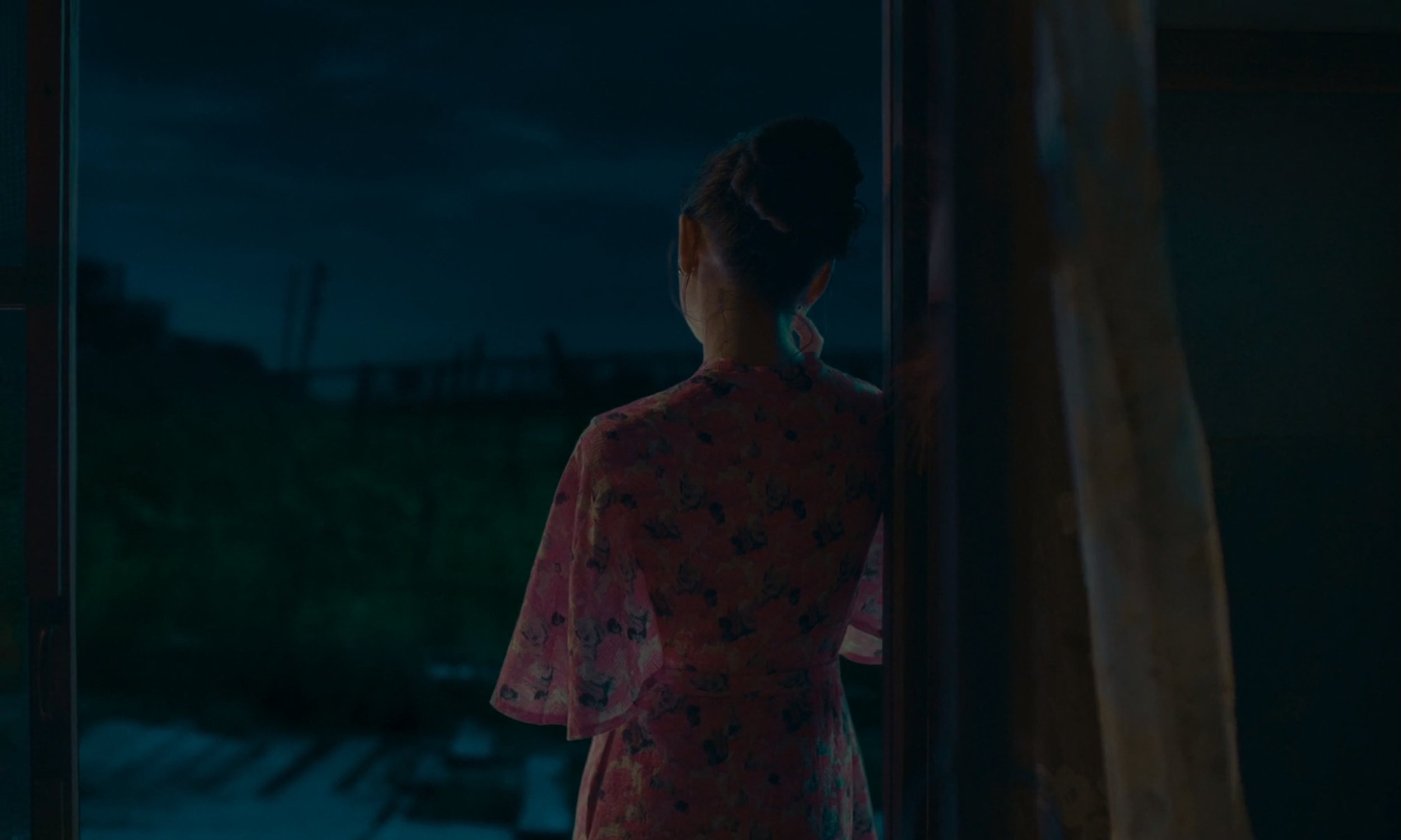
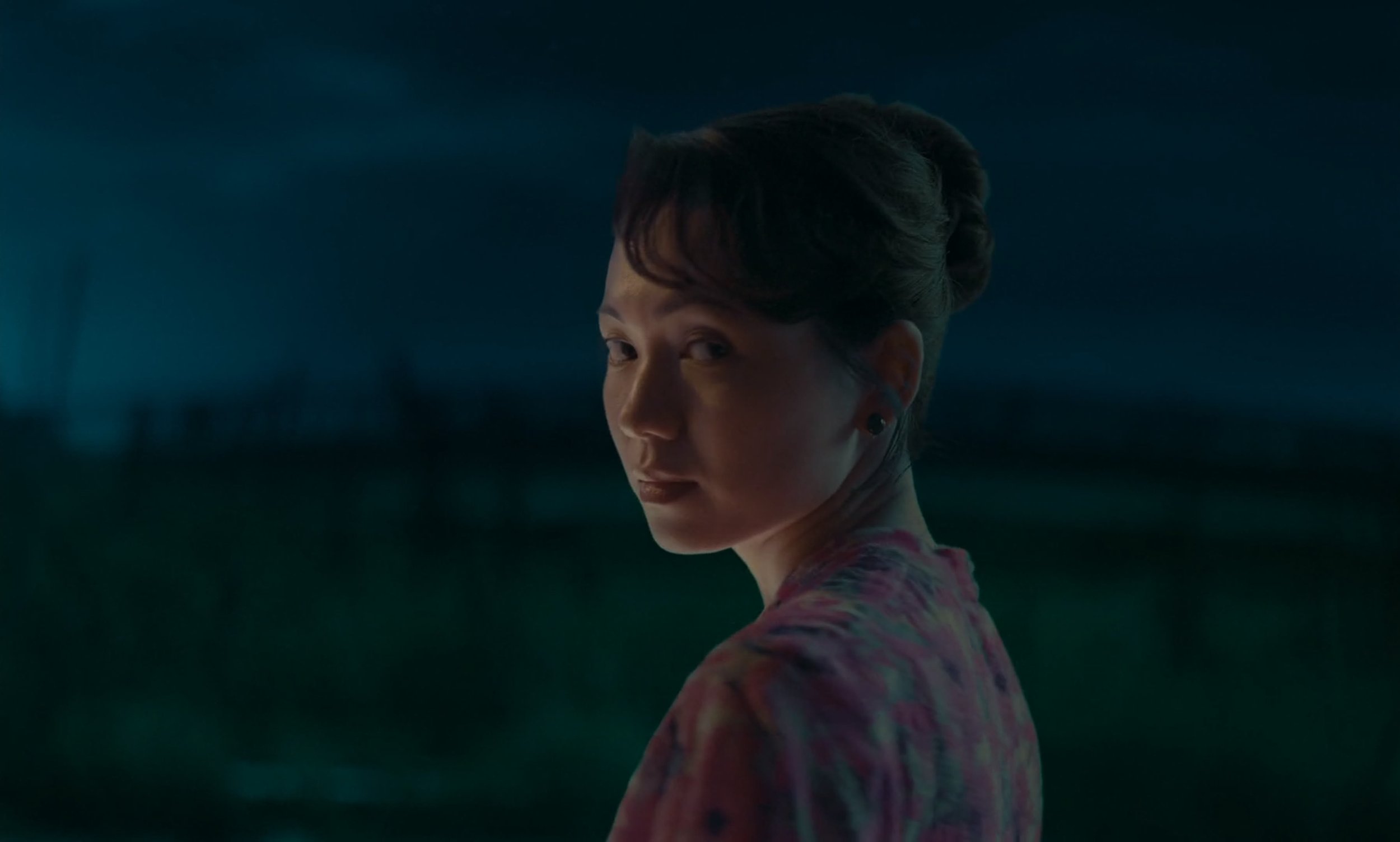
Nagasaki is never merely a backdrop. In 1952, the city is still marked by the atomic bomb and by the hardship of post-war survival. Poverty, fragile housing and an uncertain future run through these scenes without always being pushed to the foreground. For the Japanese people, and for Etsuko herself, rebuilding a life after such a catastrophe is a painful ordeal: one has to go on living amid absence, trauma and a world profoundly transformed.
That is where the beauty of the film lies. Etsuko has needed to create distance by telling her own story through the character of Sachiko. The film invites us to see Sachiko as Etsuko’s double — not as an exact equivalent, but as a proxy through whom she can displace her pain and guilt. The truth becomes even more elusive, and Niki will never hold all the keys to her mother’s past. Perhaps the most tragic figure is Keiko: Mariko seems to become her ghost, a presence that is difficult to grasp, as the young girl appears deeply troubled, probably traumatised.
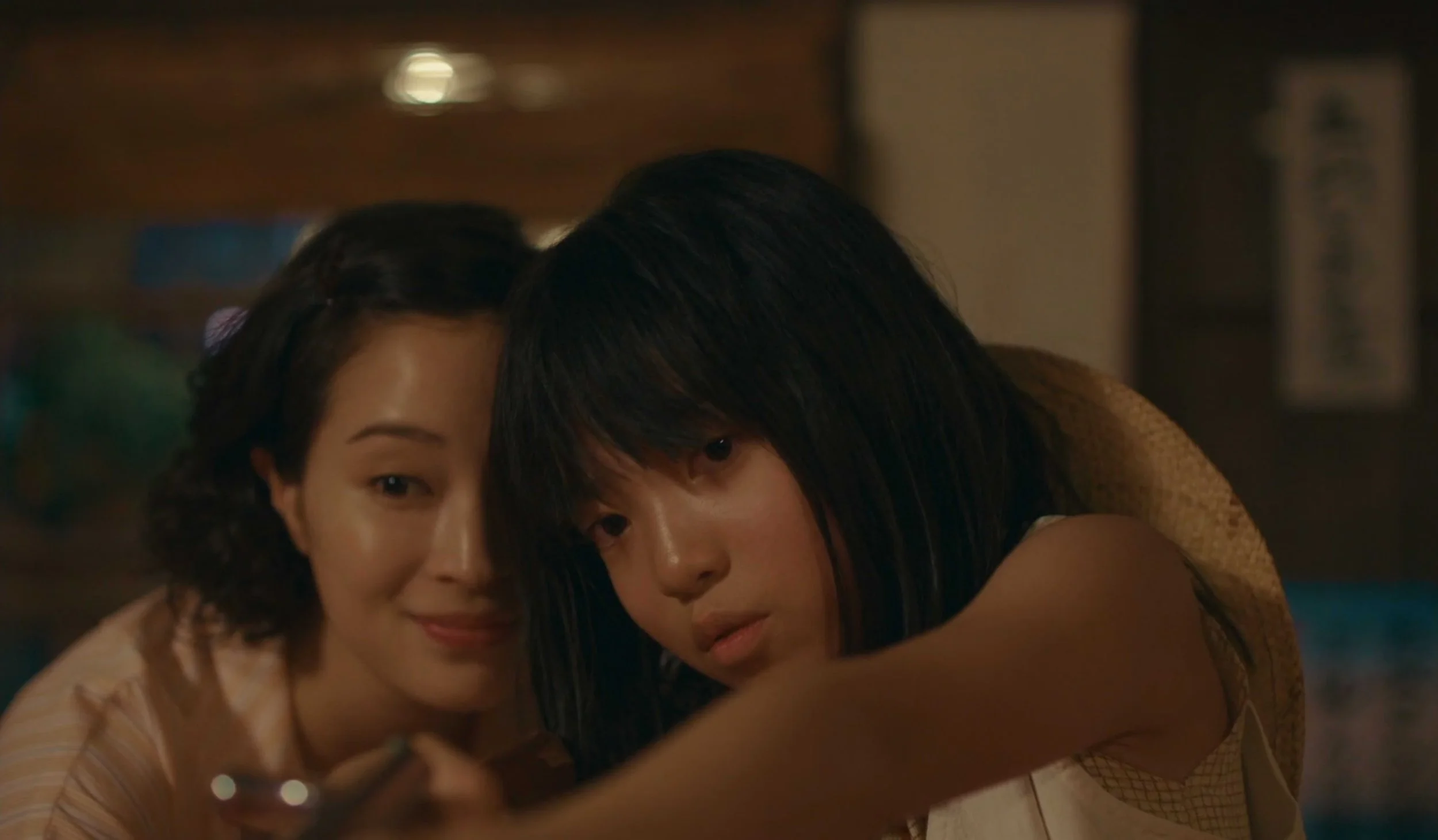
We then come to understand the weight of a mother’s guilt when her child has taken their own life. What makes Etsuko so complex is also the tension between her desire for emancipation and the burden of maternal duty. Etsuko chooses to reveal her own shortcomings as a parent through Sachiko. Likewise, leaving Japan — an act that most likely sealed Keiko’s fate — becomes Sachiko’s decision. Yet it is Etsuko who will leave.
From her balcony, Etsuko looks out over Nagasaki with a faintly amused expression. She has made herself into a spectator in order to piece her memories back together and protect herself from pain. We will never truly know the reasons for her departure from Japan. Nor will we ever really know who Etsuko is. This final view of the landscape, bathed in pale light, is beautiful: it is the gaze of a woman who dreamed of independence. That light itself feels like an embellished, incomplete memory, perhaps one that is impossible to look at directly. If she made mistakes, life spared her nothing in return.
Collective memory is of vital importance. But personal history can follow a path made up of silences, omissions and detours. Niki will not get the full account of her mother’s life. If she gains enough material to write her book, one may also wonder whether the romanticisation of Etsuko’s memories comes from Niki herself: that is another possible reading. Transmission is never simple, however, and Niki has had to work hard to untangle her mother’s memories. Yet she seems to leave the house with a form of inner peace, perhaps born from a clearer understanding of her own origins.
If the film is somewhat undermined by its ending — in the form of a twist that I find too explicit — it is because the editing returns to several scenes we have already seen with Sachiko, only now to show Etsuko instead. It makes explicit what the film had previously only suggested: Sachiko is Etsuko. Yet leaving room for doubt and ambiguity would probably have immersed us more deeply in Niki’s point of view, allowing us to piece the puzzle together for ourselves. Even so, I find the film elegant and beautifully carried by its two lead actresses. A fine film about memory, transmission and the weight of guilt.